A Strategic Opportunity for Chinese Manufacturers
As global supply chains continue to evolve, many Chinese companies are expanding their manufacturing footprint beyond China. Southeast Asia has become a key destination for this expansion, and Indonesia is emerging as one of the most attractive investment locations in the region.
With its large domestic market, strategic geographic location, competitive production costs, and strong government support for industrial development, Indonesia offers a compelling environment for Chinese manufacturers looking to establish overseas factories.
For companies considering international production bases, Indonesia provides not only access to ASEAN markets but also strong logistics connectivity to China and global trade routes.
Why Chinese Companies Are Investing in Indonesia
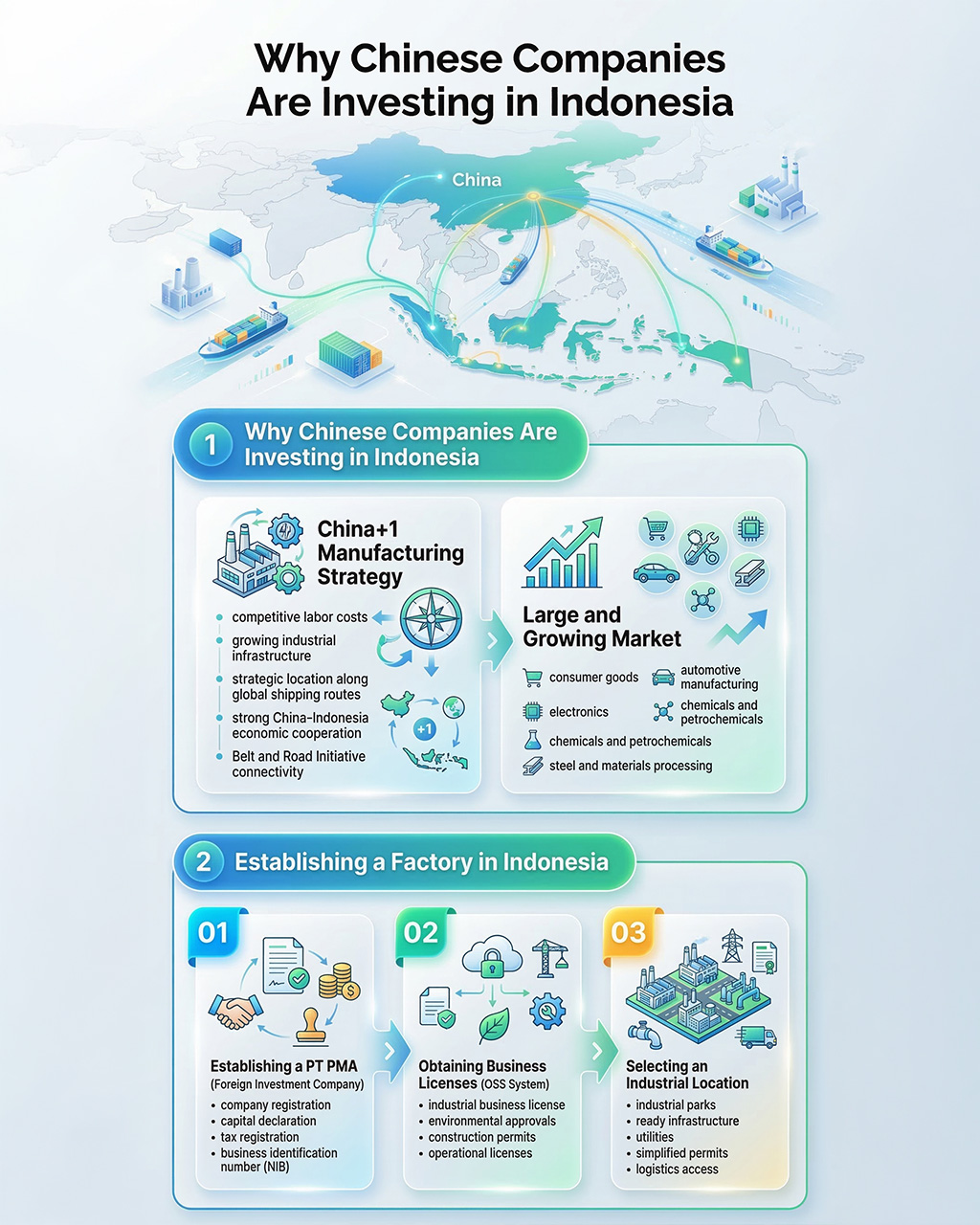
The China+1 Manufacturing Strategy
In recent years, many Chinese companies have adopted the China+1 strategy, diversifying manufacturing operations beyond
China to improve supply chain resilience and optimize costs.
Indonesia has become one of the preferred destinations because of:
Competitive labor costs
Growing industrial infrastructure
Strategic location along major global shipping routes
Strong bilateral economic cooperation between China and Indonesia
Indonesia also plays an important role in the Belt and Road Initiative (BRI), strengthening economic collaboration and infrastructure connectivity between the two countries.
A Large and Growing Market
Indonesia is the largest economy in Southeast Asia with a population of more than 270 million people. The country offers strong domestic demand in sectors such as:
Consumer goods
Automotive manufacturing
Electronics
Chemicals and petrochemicals
Steel and materials processing
For Chinese companies, Indonesia represents not only a production base but also a significant market opportunity.
Step-by-Step Process to Establish a Factory in Indonesia
Indonesia has simplified its investment procedures through regulatory reforms and digital licensing platforms. The general process for establishing a factory includes the following steps.
1. Establishing a Foreign Investment Company (PT PMA)
Foreign investors typically establish a PT PMA (Foreign-Owned Company), which serves as the legal entity for operating in Indonesia.
This process includes:
Company registration
Capital structure declaration
Tax registration
Business identification number (NIB)
2. Obtaining Business Licenses
Indonesia uses the Online Single Submission (OSS) system to simplify licensing procedures.
Through OSS, investors can obtain:
Industrial business licenses
Environmental approvals
Construction permits
Operational licenses
3. Selecting an Industrial Location
Foreign manufacturers usually build their factories within industrial parks, which provide ready infrastructure and regulatory support.
Industrial estates typically offer:
Pre-zoned industrial land
Reliable utilities (electricity, water, gas)
Simplified permitting
Integrated logistics access
Choosing the right industrial location is one of the most critical decisions for long-term operational efficiency.
Cost Advantages Compared to China
One of the main reasons Chinese manufacturers relocate production to Indonesia is cost competitiveness.
Labor Cost Comparison
Average monthly manufacturing wages:
China (coastal regions)
USD 800 – 1,200
Indonesia
USD 250 – 450
This allows companies to significantly reduce operating costs while maintaining production scale.
Land and Industrial Space
Industrial land in Indonesia is generally more affordable than in many Chinese industrial zones.
China
USD 200 – 500 per m²
Indonesia
USD 80 – 250 per m²
Lower land costs make large-scale factory development more economically feasible.
Government Incentives for Foreign Investors
The Indonesian government actively encourages manufacturing investment through various incentives.
Tax Holiday
Large-scale manufacturing investments may receive:
Corporate income tax reduction of up to 100% for 5–20 years
Tax Allowances
Investors may also receive:
Reduced corporate tax rates
Accelerated depreciation
Loss carry-forward up to 10 years
Special Economic Zones and Industrial Estates
Companies operating within designated industrial estates may benefit from:
Import duty exemptions
Simplified licensing procedures
Streamlined customs processes
These policies are designed to make Indonesia increasingly competitive as a global manufacturing base.
Logistics Access and Export Routes to China
Indonesia’s location provides efficient maritime connectivity to China and global markets.
Typical shipping times include:
Indonesia → Southern China
5–8 days
Indonesia → Eastern China
7–12 days
For export-oriented manufacturers, proximity to major ports can significantly reduce logistics costs and improve supply chain reliability.
Why Integrated Port & Industrial Estates Matter
For manufacturing companies, logistics efficiency is one of the most critical factors affecting competitiveness.
Industrial estates that are integrated with deep-sea ports allow companies to:
Reduce inland transportation costs
Accelerate export and import processes
Improve overall supply chain efficiency
This model has become increasingly important for industries such as:
Steel and metals
Chemicals and petrochemicals
Automotive manufacturing
Heavy industry
Bulk cargo processing
Choosing the Right Industrial Park in Indonesia
Indonesia has developed many industrial zones across different regions, each offering different advantages depending on industry type and logistics needs.
However, one of the key factors investors must consider is port access and logistics efficiency, especially for export-oriented manufacturing.
Industrial parks that are integrated with port infrastructure provide significant advantages, including:
Reduced logistics costs
Faster export processes
Simplified supply chain operations
This is where integrated industrial and port estates become highly valuable for manufacturers.
JIIPE: An Integrated Industrial and Port Ecosystem
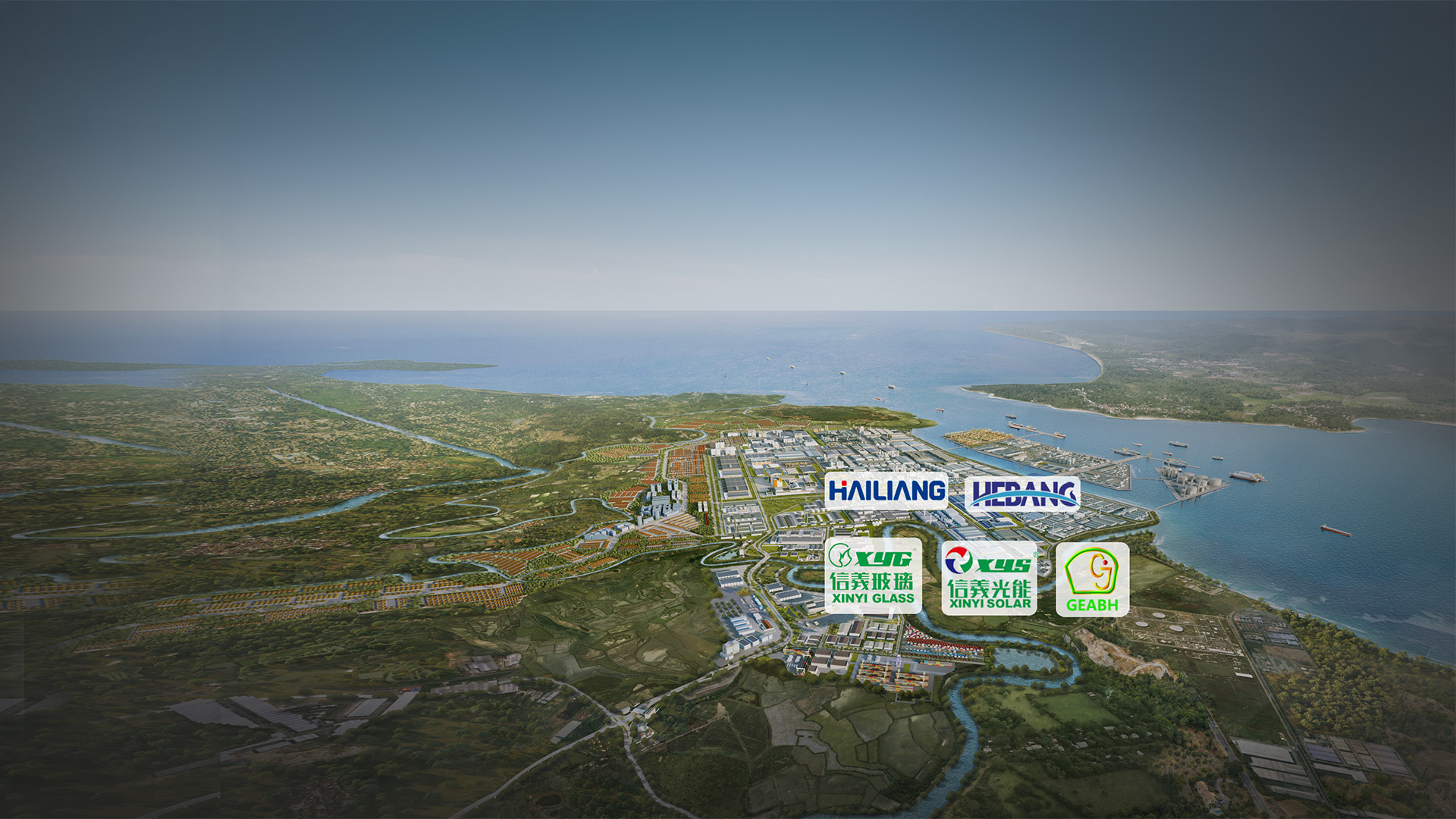
One of the most unique industrial developments in Indonesia is the Java Integrated Industrial and Ports Estate (JIIPE), located in East Java.
JIIPE is designed as a fully integrated industrial estate directly connected to an international deep-sea port, enabling seamless, end-to-end logistics for manufacturers.
The estate offers:
Large-scale industrial land for heavy industries
Direct access to an international port terminal
Reliable power, water, and utilities infrastructure
A strategic location within East Java’s industrial corridor
Case Study Integration: Proven Success from Chinese Enterprises
The success of leading Chinese investors in JIIPE provides strong, real-world validation of its value proposition.
Hailiang Group, through PT Hailiang Nova Material Indonesia, selected JIIPE after benchmarking multiple industrial zones across Indonesia. The decision was driven by JIIPE’s integrated logistics ecosystem, efficient supply chain access, responsive support team, streamlined licensing process, and attractive fiscal incentives such as tax holidays and duty exemptions. Notably, JIIPE reported that Hailiang achieved its first-phase production trial within approximately 208 days from the start of construction—demonstrating accelerated project execution.
Meanwhile, Xinyi Glass, a global leader in glass manufacturing, secured its investment in JIIPE in 2022, including integrated support covering land, utilities, and port access. By December 2024, Xinyi successfully ignited its first float glass furnace in Indonesia, marking a major milestone in its regional expansion. The project highlights how JIIPE’s direct port connectivity and industrial infrastructure can support large-scale, capital-intensive manufacturing operations.
More broadly, JIIPE’s integrated deep-sea port model has been positioned to help tenants improve operational efficiency and reduce logistics costs by up to 20%, supported by direct factory-to-port connectivity that minimizes inland transportation.
For Chinese manufacturers seeking an efficient and scalable production base in Southeast Asia, JIIPE offers a compelling combination of industrial readiness, execution speed, and global logistics integration.